Why replaced my motorhomes tires(even though the looked good)
Why tire age matters more then tread
Tire age may not be obvious at a glance, but it matters more than most people realize. Tires are made from rubber compounds, and those compounds begin to break down over time—regardless of how much tread is left.
That deterioration often starts from the inside out. The rubber and internal cords go through constant heat cycles: heating up while driving, cooling down when parked, and repeating that process over and over. Add in sun exposure, temperature swings, and the weight a motorhome places on its tires, and the materials slowly begin to degrade.
Even when a tire looks perfect on the outside, the internal structure can be weakening. Cords can begin to separate, and small internal cracks can form long before anything is visible. This is especially important on heavy RVs, where tires carry a lot of weight and run hotter than passenger vehicle tires.
Because of this, most manufacturers recommend a five- to seven-year service life for tires, whether they are on the road or just sitting. Tread depth alone doesn’t tell the full story—age and chemical breakdown matter just as much, if not more.

What I found after checking date codes
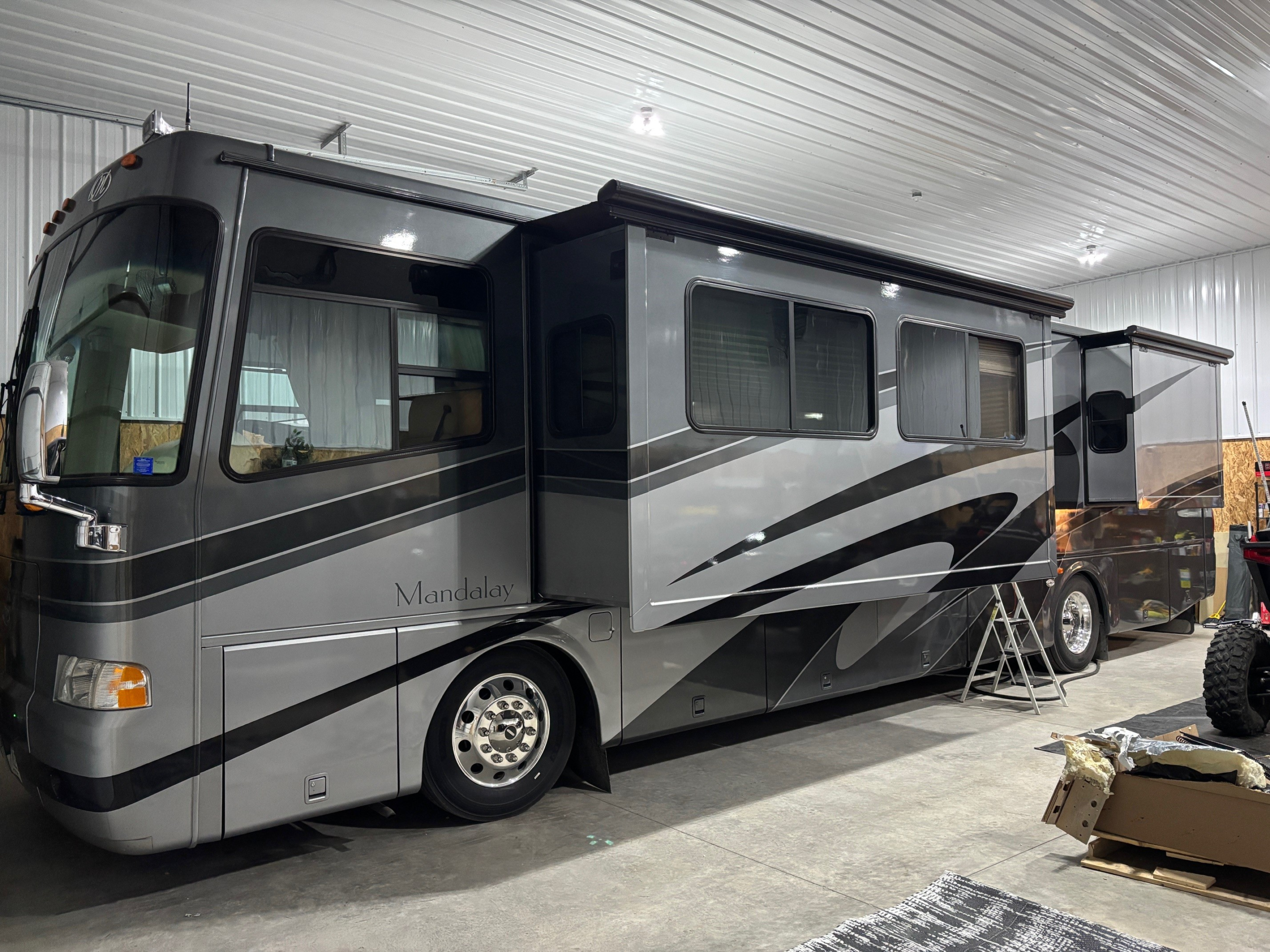
After checking the date codes on the tires, I found that the tires on the Mandalay were close to eight and a half years old. On the surface, that didn’t seem like a big deal at first—the coach only had about 5,000 miles on it, and the tires looked almost new.
I even took it on a short road trip without any obvious issues. But once I got back and started doing real research, it became clear that those tires were past their recommended service life, regardless of how good they looked.
A lot of people told me not to worry about it. The common advice was, “As long as there’s no cracking, they’ll be fine.” But after looking into manufacturer recommendations and understanding how tire compounds break down over time, I wasn’t comfortable relying on appearances alone.
At that point, it wasn’t worth the risk—to myself, to anyone riding with me, or to the people around me on the road. Just because something looks good doesn’t mean it’s still safe, and that realization is what ultimately pushed me to replace them.

Why I replaced them right after taking a trip
After getting back from the short trip and discovering the date code issues, I decided not to drive the coach any farther until I did more research. I started talking with tire dealers and manufacturers in the area to get a broader perspective.
The general consensus was clear. Most of them said the same thing: replace the tires—it’s a safety issue. A couple of people did surprise me by saying the tires looked fine and that I could probably keep running them. But that advice didn’t sit well with me.
At that point, it came down to risk. I wasn’t willing to take a chance based solely on how something looked, especially when the manufacturer recommendations and the majority of professional opinions said otherwise. That kind of gamble just isn’t worth it.
I wasn’t willing to put my life, anyone else’s life, or potential damage to property on the line based on someone’s opinion when the facts were already pointing in one direction. For me, the decision was simple—replace them and remove the uncertainty.

Tire size, ride quality and the trade-off
After getting back from the short trip and discovering the date code issues, I decided not to drive the coach any farther until I did more research. I started talking with tire dealers and manufacturers in the area to get a broader perspective. The general consensus was clear. Most of them said the same thing: replace the tires—it’s a safety issue. A couple of people did surprise me by saying the tires looked fine and that I could probably keep running them. But that advice didn’t sit well with me. At that point, it came down to risk. I wasn’t willing to take a chance based solely on how something looked, especially when the manufacturer recommendations and the majority of professional opinions said otherwise. That kind of gamble just isn’t worth it. I wasn’t willing to put my life, anyone else’s life, or potential damage to property on the line based on someone’s opinion when the facts were already pointing in one direction. For me, the decision was simple—replace them and remove the uncertainty.

Tire pressure, balancing, and the problems that followed
After the new tires were installed, they were initially inflated to the maximum cold PSI listed on the tire. Right away, the ride felt noticeably rougher than it had with the old tires—and as the tires heated up while driving, it only got worse. The difference in ride quality was dramatic and not in a good way.
After doing more research, I took the motorhome to a CAT scale and weighed all four corners so I could get accurate corner weights. Using the tire manufacturer’s load and inflation charts, it became clear that the tires were grossly overinflated—by about 35 pounds for my actual weight. Once I adjusted the pressure correctly based on the real load, the ride improved significantly.
Then came the balancing issues. On a previous motorhome, I had used balancing beads, which took a mile or two to smooth out but worked fine once they equalized. With these new tires, I decided to try liquid balancing, thinking it might settle faster. That turned out to be a mistake.
On a 180-mile trip, I had a constant slight vibration in the front end. The steering wheel shake was most noticeable between 62 and 67 mph, right in the normal cruising range. It never fully went away.
I had the tire company come back out, remove the liquid, and dry the inside of the tires. At that point, I installed Centramatic hub balancers. I painted them black so they wouldn’t be visible through the wheel openings. While they also take a few revolutions to fully equalize, once they did, the difference was immediate. The vibration disappeared, everything smoothed out, and the overall ride quality improved immensely.
What would I do differently next time
Being as frugal as I am, spending money on tires that looked brand new but were out of date was a hard pill to swallow—especially when money is tight. Looking back, though, there are a few things I would absolutely do differently.
First, I would probably shop a little more when it came to the tires themselves. I do feel I was treated fairly by the local tire dealer, but taking more time to compare options would have helped me feel even better about the decision.
Second, I would have gone with Centramatic hub balancers right from the start if dynamic balancing wasn’t available—which it wasn’t at the time. That alone would have saved time, frustration, and unnecessary trial and error.
Most importantly, I would have spent more time upfront weighing the coach properly, balancing the tires correctly, and setting tire pressures based on real corner weights instead of relying on maximum sidewall pressure. Getting the pressures right made a huge difference in ride quality and handling
One thing I wouldn’t skip again is running a tire pressure monitoring system. I personally use a TireMinder tire pressure monitoring system, and for me it’s the cheapest insurance you can add to an RV. Being able to see tire pressure and temperature in real time gives you early warning before a small issue turns into a big problem.
why tires are one thing I won't ignore again
After educating myself on tires, I’ll never look at them—or overlook them—the same way again. They’re easy to ignore because they’re out of sight and often still look good, but that can be a dangerous mistake.
After reading countless threads on forums and safety discussions online, I’ve seen too many real-world examples of motorhomes that suffered tire failures. Blowouts that caused serious damage, loss of control, and near misses with other vehicles. From a safety standpoint, it’s one of the most serious risks you can face on the road.
Because of that, tires are now the number one thing I check before going anywhere. I don’t rush it, and I don’t assume anything. A simple walk-around takes maybe 15 minutes, but that small amount of time is worth it for the peace of mind it provides.
Making sure your tires are safe is one of the easiest ways to protect your motorhome, the people inside it, and everyone else on the road. It’s a habit I won’t ever skip again—and it’s one I strongly recommend to anyone traveling in an RV.
The reason for doing this website, YouTube, besides helping people
